
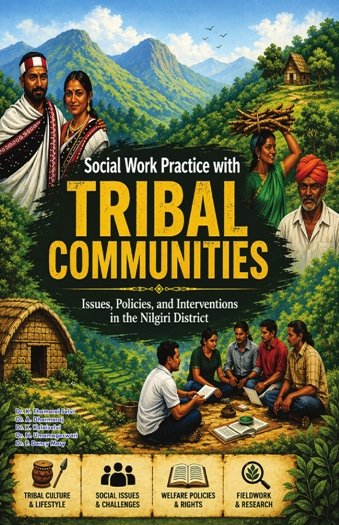
Social Work Practice with Tribal Communities: Issues, Policies, and Interventions in the Nilgiri District Issues, Policies and Interventions in the Nilgiri District
by Dr. K. Thamarai Selvi, Dr. A. Dharmaraj, Dr. K. Kalai Selvi, Dr. N. Umamageswari & Dr. P. Dency Mary
The Nilgiri District of Tamil Nadu is home to several indigenous tribal communities, including the Todas, Kotas, Kurumbas, Irulas, and Paniyas, each possessing distinct cultural traditions and livelihoods. Despite various developmental initiatives, these communities continue to face challenges such as poverty, limited access to education and healthcare, land alienation, unemployment, and the erosion of traditional knowledge systems. Social work practice in tribal areas focuses on understanding these socio-economic and cultural issues while promoting community participation, social justice, and sustainable development. Social workers play a crucial role in identifying community needs, facilitating access to welfare services, and empowering tribal populations to protect their rights and cultural heritage.
Government policies and welfare programs have been introduced to improve the living conditions of tribal communities through education, healthcare, housing, livelihood support, and legal protection. Social work interventions in the Nilgiri District emphasize community organization, capacity building, awareness creation, and advocacy for equitable access to resources. These interventions often involve collaboration with government agencies, non-governmental organizations, and local leaders to address issues related to health, education, women’s empowerment, and environmental conservation. By adopting culturally sensitive and participatory approaches, social work professionals contribute to the overall well-being and sustainable development of tribal communities in the region.
Pages: 64
Publisher: First Book Publishing
DOI:
ISBN: 978-93-92151-64-4