
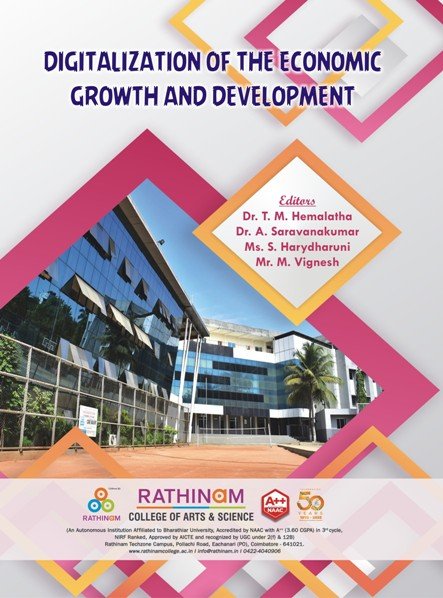
Digitalization of the Economic Growth and Development
by Dr. T. M. Hemalatha, Dr. A. Saravanakumar, S. Harydharuni & S. Harydharuni
Strong economic growth in the first quarter of FY23 helped India overcome the UK to become the fifth-largest economy after it recovered from the COVID-19 pandemic shock. India has emerged as the fastest-growing major economy in the world and is expected to be one of the top three economic powers in the world over the next 10-15 years, backed by its robust democracy and strong partnerships. India is primarily a domestic demand-driven economy, with consumption and investments contributing to 70% of the economic activity. With an improvement in the economic scenario and the Indian economy recovering from the Covid-19 pandemic shock, several investments and developments have been made across various sectors of the economy. A subject as vast as the post reform Indian economy rightly deserves a whole series of books. The aspects of the Indian economy covered in the series are History, Evolution, and Growth; Anatomy of the Indian Economy; Agrarian; Industrial; Financial Sector.
This volume investigates the nature of economic growth in India, its pace over time, its relationship to changes in the policy regime and the role of the external sector, and uses data to evaluate the policies that have implicitly underpinned the changes. This book gives helpful insights and best practices to handle the new mechanical changes while differentiating the most recent trends, business opportunities, and challenges related to digitalization. It also characterizes ideas in relation to business changes brought about by digitalization.
The chapters focus on sectoral performances, in particular agricultural and industrial growth, inter-sectoral linkages, the role of trade and capital flows, and the sources of growth of India’s exports before and after economic reforms. It presents data and analyses of inter-state variations in economic growth and regional inequality. The chapters analyse the political economy of growth in India. It throws light on the systemic implications of socio-economic changes, their effect on the poor, and the relationship between economic growth and social development. To bridge a gap in the market has been a driving force behind the writing of this text. Since we have all been teaching about economic growth courses for a while, we are aware of the frustrations that students have with the absence of a thorough yet approachable textbook that covers a wide range of basic economic topics with the advancement of digitalization and technological aspects.
Pages: 327
Publisher: First Book Publishing
DOI:
ISBN: 978-93-92151-31-6